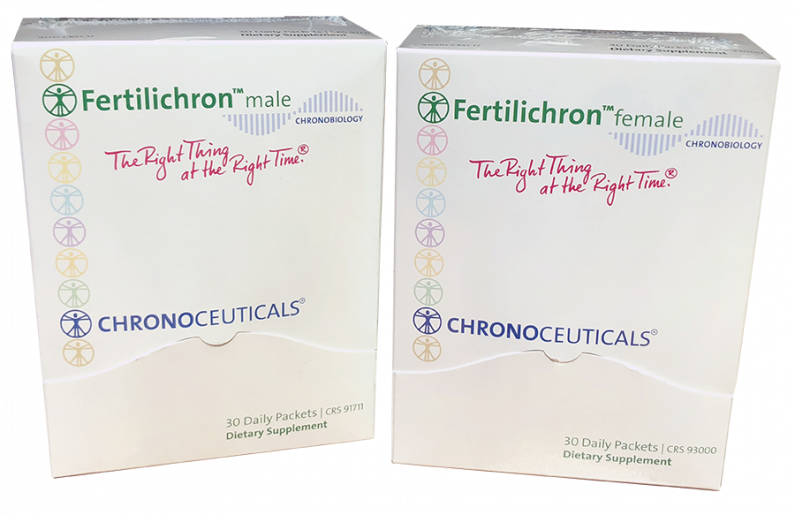
Fertilichron male Research:
Sperm quality improvement after natural anti-oxidant treatment of asthenoteratospermic men with leukocytospermia.
(n=51, controlled trail per 3 month).
Piomboni Pet al., Asian J Androl 2008
Abstract Aim: To study the immune-modulating and anti-oxidant effects of beta-glucan, papaya, lactoferrin, and vitamins C and E on sperm characteristics of patients with asthenoteratozoospermia associated with leucocytosis.
Methods: Fifty-one patients referred to our Sterility Center for semen analysis were selected. Sperm parameters were assessed before and after patient’s treatment with beta-glucan, lactoferrin, papaya, and vitamins C and E. DNA damage was assessed by the acridine orange test and sperm structural characteristics were evaluated by transmission electron microscopy.
Results: After 90 days of treatment, an increase in the percentage of morphologically normal sperm (17.0 ± 5.2 vs. 29.8 ± 6.5) and total progressive motility (19.0 ± 7.8 vs. 34.8 ± 6.8) were detected. Structural sperm characteristics as well as chromatin integrity were also improved after treatment. In terms of leukocyte concentration in seminal fluid, a significant reduction was recorded (2.2 ± 0.9 vs. 0.9 ± 0.2).
Conclusion: The treatment of an inflammatory process by the synergic action of immune modulators and anti-oxidants could protect sperm during maturation and migration, leading to improved sperm function. (Asian J Androl 2008 ***; 10: – ) http://www.progine.it/Sperm%20quality.pdf
Indications of the mechanisms involved in improved sperm parameters by zinc therapy(n=45, controlled trail per 3 month).
Omu AEet al., Med Princ Pract 2008
Abstract:
Objects:To determine possible indications of the mechanisms involved in improved sperm parameters by zinc therapy in asthenozoospermic men.
Subjects and Methods: Forty-five men with asthenozoospermia (>or=40% immotile sperm) were randomized into four therapy groups: zinc only: n = 11; zinc + vitamin E: n = 12 and zinc + vitamins E + C: n = 14 for 3 months, and non-therapy control group: n = 8. Semen analysis was done according to WHO guidelines. Malone dialdehyde, tumour necrosis factor-alpha (TNF-alpha), total antioxidant capacity, superoxide dismutase (SOD) and glutathione peroxidase were determined in the semen and serum. Antisperm antibodies IgG, IgM and IgA were evaluated by immunobeads. Sperm chromatin integrity was determined by acid denaturation by acridine orange and sperm apoptosis by light and electron microscopy. The effect of zinc on in vitro induced sperm oxidative stress by NADH was evaluated.
Results: Asthenozoospermia was significantly associated with oxidative stress with higher seminal malone dialdehyde (8.8 vs. 1.8 mmol/l, p < 0.001) and TNF-alpha (60 vs. 12 pg/l, p < 0.001), and low total antioxidant capacity (1.8 vs. 8.4, p < 0.01), SOD (0.8 vs. 3.1, p < 0.01) and glutathione peroxidase (1.6 vs. 4.2, p < 0.05), compared to normozoospermia. Zinc therapy alone, in combination with vitamin E or with vitamin E + C were associated with comparably improved sperm parameters with less oxidative stress, sperm apoptosis and sperm DNA fragmentation index (DFI). On the whole, there was no difference in the outcome measures between zinc only and zinc with vitamin E and combination of vitamins E + C. In the in vitro experiment zinc supplementation resulted in significantly lower DFI (14-29%, p < 0.05) compared to zinc deficiency.
Conclusion: Zinc therapy reduces asthenozoospermia through several mechanisms such as prevention of oxidative stress, apoptosis and sperm DNA fragmentation.
Antioxidants and Phytocompounds on Seminal Oxidative Stress
Article (PDF Available) · March 2017 with 184 Reads
DOI: 10.3390/diseases5010009
Abstract: Defective sperm function has been identified as the most common cause of infertility. The objective of this study was to review recent findings on the effects of various antioxidants on male fertility. High amounts of poly unsaturated fatty acid are found in the mammalian spermatozoa membranes, thereby making them susceptible to lipid peroxidation. Although, free radicals and reactive oxygen species (ROS) play major roles in reproduction, they are strongly associated with oxidative stress. Furthermore, factors such as obesity, inflammation, pollutants and cigarette smoking are negatively correlated with spermatogenesis. Endogenous antioxidants system exists to mediate these damages. In a normal physiological state, the seminal plasma contains antioxidant enzyme mechanism that is capable of quenching these ROS as well as protecting the spermatozoa against any likely damage. However, high level of ROS triggered by inflammatory cells and oxidation of fatty acid in obese subjects may down play antioxidant mechanism resulting in oxidative stress. Evaluation of such oxidative stress is the first step in the treatment of male infertility through administration of suitable antioxidant. Notably, antioxidant such as vitamin E and C, carotenoids and carnitine have been found beneficial in restoring a balance between ROS generation and scavenging activities. There are emerging evidences that herbal products can also boost male reproductive functions. Nonetheless, a good lifestyle, regular exercise, avoidance of stress and observing safety rules at work are habits that can reverse male infertility.
(PDF) Male Infertility: The Effect of Natural Antioxidants and Phytocompounds on Seminal Oxidative Stress. Available from: https://www.researchgate.net/publication/314202739_Male_Infertility_The_Effect_of_Natural_Antioxidants_and_Phytocompounds_on_Seminal_Oxidative_Stress
One-carbon cycle support rescues sperm damage in experimentally induced varicocoele in rats.
Mohammadi P1,2, Hassani-Bafrani H2,3, Tavalaee M1, Dattilo M4, Nasr-Esfahani MH1,5.
Abstract
Objectives: To investigate whether micronutrients in support of the one-carbon cycle and glutathione synthesis are effective in improving sperm damage after surgical varicocoele induction in rats and whether any effect is achieved without a rebound reductive stress as seen with oral antioxidants.
Materials and Methods: Surgical varicocele was induced in adult male Wistar rats and resulted in significant damage to the testis and sperm cells measured at 2 and 4 months after surgery. At 2 months after surgery, rats received a 2-month oral supplementation in support of the one-carbon cycle containing B vitamins (B2, B3, B6, folic acid and B12), N-acetyl-cysteine, zinc, small amounts of vitamin E, and a natural source of betalains and quercetine (Condensyl® ; Parthenogen SAGL, Lugano, Switzerland and Nurilia SARL, Lyon, France).
Results: One-carbon cycle supplementation, compared to untreated controls, significantly improved the morphometric characteristics of testis (P < 0.05), sperm concentration, motility and abnormal morphology (P < 0.001), sperm chromatin condensation (aniline blue staining, P < 0.05), sperm DNA damage (acridine orange staining, P < 0.05) and sperm lipid peroxidation (BODIPY C11, P < 0.001). The improvement in both nuclear condensation and DNA damage and the lack of excessive inhibition of lipid peroxidation confirmed that no reductive stress had occurred.
Conclusions: Micronutrients in support of the one-carbon cycle are effective in the treatment of surgically induced varicocele in rats, probably by activating natural antioxidant defenses and epigenetics. These results support the idea that essential micronutrients including B vitamins may also have a positive influence in clinical varicocele, which should be tested in prospective clinical trials.
https://www.ncbi.nlm.nih.gov/pubmed/29752770
Lipovac M, Bodner F, Imhof M, Chedraui P.
Reprod Biol Endocrinol.2016 Dec 9;14(1):84.
Comparison of the effect of a combination of eight micronutrients versus a standard mono preparation on sperm parameters.
Abstract
Background: There are reports showing that l-carnitine alone or in combination with other micronutrients improve sperm parameters. However, comparative studies are still lacking. This study was carried out to compare the short term effects of a combination of eight micronutrients including l-carnitine vs. a mono-substance (l-carnitine alone) on sperm parameters.
Methods: This was a prospective, open-labelled, nonrandomized study that included male subjects (20 to 60 years) with at least 1 year of subfertility and at least one pathological semen analysis who received 3 months treatment with a mono-substance (500 mg l-carnitine/twice a day, n = 156) or a combined compound (440 mg l-carnitine + 250 mg l-arginine + 40 mg zinc + 120 mg vitamin E + 80 mg glutathione + 60 μg selenium + 15 mg coenzyme Q10 + 800 μg folic acid/once a day, n = 143) for the same time period. Sperm parameters were analyzed before and after treatment and groups comparisons performed.
Results: Baseline characteristics were similar among studied groups (age and body mass indices). Semen parameters (volume, density, overall progressive motility [including slow and fast motility]) and percentage of sperm with normal morphology improved after 3 months in both groups as compared to baseline. However, relative change (expressed as % increase of absolute values) for sperm density and overall progressive motility (including fast motility) was found to be higher for the combined micronutrient treatment group as compared to the mono-treatment using l-carnitine alone.
Conclusion: Both analyzed groups displayed a positive short-term effect on all sperm parameters; however effect on density and motility was significantly better for the combined formulation. There is need for more research in this matter that includes long term outcome data.
https://www.researchgate.net/publication/311553834_Comparison_of_the_effect_of_a_combination_of_eight_micronutrients_versus_a_standard_mono_preparation_on_sperm_parameters
Fertilichron female Research:
Vitamin E effect on controlled ovarian stimulation of unexplained infertile women.
Cicek N1, Eryilmaz OG, Sarikaya E, Gulerman C, Genc Y.
Author information
Abstract:
Purpose: To determine Vit E effect on the treatment outcomes of women with unexplained infertility undergoing controlled ovarian stimulation and intrauterine insemination (IUI).
Methods: The study group (Group A, n053) underwent controlled ovarian stimulation with clomiphene citrate with Vit E administration, 400 IU/day p.o. while the control group(Group B, n050) underwent ovulation induction without VitE. Treatment outcomes were compared between the groups.
Results: There were no significant differences between the two groups with respect to the demographic outcomes. The difference in endometrial thickness on the day of hCG administration was significant between the two groups (p00.001). The effect of receiving Vit E on the implantation and the on going pregnancy rates were assessed Odds Ratio (OR) and corresponding 95% Confidence Intervals (CI). Receiving Vit E was not significantly associated with the implantation and the ongoing pregnancy rates; OR 0 1.22, 95% CI (0.44–3.4) and OR 0 1.43, 95% CI (0.49–4.1), respectively.
Conclusion: Vit E administration may improve the endometrial response in unexplained infertile women via the likely antioxidant and the anticoagulant effects. It may also modulate the antiestrogenic effect of clomiphene citrate and the problem of a thin endometrium in these cycles may beadjusted
https://www.ncbi.nlm.nih.gov/pubmed/22302530
Micronutrition and fertility problems in women: What is essential?
Article · April 2017 with 3 Reads
DOI: 10.1684/mte.2017.0655
Abstract: New way of life of modern women (tobacco, alcohol, polluted environment, industrial food, endocrine disruptor, etc.) causes an increase of production of reactive oxygen species that affect female fertility. It was found that oxidative stress may damage the oocytes and may impair their fertilization capacity. The aim of this review of recent studies is to select natural ingredients able to reduce oxidative stress. A combination of vitamins (B, C and E), minerals (selenium, iodine) and myo-inositol could be useful as an alternative way, on top of balanced diet and lifestyle advice, for women planning to become pregnant including those with or without SOPK.
Micronutrition and fertility problems in women: What is essential?. Available from: https://www.researchgate.net/publication/319078771_Micronutrition_and_fertility_problems_in_women_What_is_essential?ev=publicSearchHeader&_sg=OLkflgbUBKR-DW8BnuhjARU6gATKsqVmAZziZwYqFsGhEAPbuv8Sktg1NM4DT_khpyLjwXNZ0JcnnAw
The effect of micronutrient supplements on female fertility.
Buhling KJ1, Grajecki D.
Abstract
Purpose of Review: Benefit of micronutrient supplementation on female fertility.
Recent Findings: Reports of randomized trials are rare. Most studies are focused on multivitamin supplementations. For some micronutrients, a positive impact on fertility could be shown. This article reviews the available clinical studies as well as the pathophysiological background of possible effects and summarizes the potential benefits of selected micronutrients on female fertility.
Summary: Apart from lowering the malformation risk by periconceptional supplementation of folic acid, substitution with different micronutrients, particularly folic acid, vitamin B6, vitamin C, vitamin D, vitamin E, iodine, selenium, iron, and DHA might have a positive impact on infertility treatment. The multivitamin formulation should take the pathophysiology, clinical studies, and upper limits into account.
https://www.ncbi.nlm.nih.gov/pubmed/23571830
Antioxidants for female subfertility.
Showell MG1, Mackenzie-Proctor R, Jordan V, Hart RJ.
Abstract:
Background: A couple may be considered to have fertility problems if they have been trying to conceive for over a year with no success. This may affect up to a quarter of all couples planning a child. It is estimated that for 40% to 50% of couples, subfertility may result from factors affecting women. Antioxidants are thought to reduce the oxidative stress brought on by these conditions. Currently, limited evidence suggests that antioxidants improve fertility, and trials have explored this area with varied results. This review assesses the evidence for the effectiveness of different antioxidants in female subfertility.
Objectives: To determine whether supplementary oral antioxidants compared with placebo, no treatment/standard treatment or another antioxidant improve fertility outcomes for subfertile women.
Search Methods: We searched the following databases (from their inception to September 2016) with no language or date restriction: Cochrane Gynecology and Fertility Group (CGFG) specialized register, the Cochrane Central Register of Studies (CENTRAL CRSO), MEDLINE, Embase, PsycINFO, CINAHL and AMED. We checked reference lists of appropriate studies and searched for ongoing trials in the clinical trials registers.
Selection Criteria: We included randomized controlled trials (RCTs) that compared any type, dose or combination of oral antioxidant supplement with placebo, no treatment or treatment with another antioxidant, among women attending a reproductive clinic. We excluded trials comparing antioxidants with fertility drugs alone and trials that only included fertile women attending a fertility clinic because of male partner infertility.
Data Collection and Analysis: Two review authors independently selected eligible studies, extracted the data and assessed the risk of bias of the included studies. The primary review outcome was live birth; secondary outcomes included clinical pregnancy rates and adverse events. We pooled studies using a fixed-effect model, and calculated odds ratios (ORs) with 95% confidence intervals (CIs) for the dichotomous outcomes of live birth, clinical pregnancy and adverse events. We assessed the overall quality of the evidence by applying GRADE criteria.
Main Results: We included 50 trials involving 6510 women. Investigators compared oral antioxidants, including combinations of antioxidants, N-acetyl-cysteine, melatonin, L-arginine, myo-inositol, D-chiro-inositol, carnitine, selenium, vitamin E, vitamin B complex, vitamin C, vitamin D+calcium, CoQ10, pentoxifylline and omega-3-polyunsaturated fatty acids versus placebo, no treatment/standard treatment or another antioxidant.Very low-quality evidence suggests that antioxidants may be associated with an increased live birth rate compared with placebo or no treatment/standard treatment (OR 2.13, 95% CI 1.45 to 3.12, P > 0.001, 8 RCTs, 651 women, I2 = 47%). This suggests that among subfertile women with an expected live birth rate of 20%, the rate among women using antioxidants would be between 26% and 43%.Very low-quality evidence suggests that antioxidants may be associated with an increased clinical pregnancy rate compared with placebo or no treatment/standard treatment (OR 1.52, 95% CI 1.31 to 1.76, P < 0.001, 26 RCTs, 4271 women, I2 = 66%). This suggests that among subfertile women with an expected clinical pregnancy rate of 22%, the rate among women using antioxidants would be between 27% and 33%. Heterogeneity was moderately high.There was insufficient evidence to determine whether there was a difference between the groups in rates of miscarriage (OR 0.79, 95% CI 0.58 to 1.08, P = 0.14, 18 RCTs, 2834 women, I2 = 23%, very low quality evidence). This suggests that, among subfertile women with an expected miscarriage rate of 7%, use of antioxidants would be expected to result in a miscarriage rate of between 4% and 7%. There was also insufficient evidence to determine whether there was a difference between the groups in rates of multiple pregnancy (OR 1.00, 95% CI 0.73 to 1.38, P = 0.98, 8 RCTs, 2163 women, I2 = 4%, very low quality evidence). This suggests that among subfertile women with an expected multiple pregnancy rate of 8%, use of antioxidants would be expected to result in a multiple pregnancy rate between 6% and 11%. Likewise, there was insufficient evidence to determine whether there was a difference between the groups in rates of gastrointestinal disturbances (OR 1.55, 95% CI 0.47 to 5.10, P = 0.47, 3 RCTs, 343 women, I2 = 0%, very low quality evidence). This suggests that among subfertile women with an expected gastrointestinal disturbance rate of 2%, use of antioxidants would be expected to result in a rate between 1% and 11%. Overall adverse events were reported by 35 trials in the meta-analysis, but there was insufficient evidence to draw any conclusions.Only one trial reported on live birth, clinical pregnancy or adverse effects in the antioxidant versus antioxidant comparison, and no conclusions could be drawn.Very low-quality evidence suggests that pentoxifylline may be associated with an increased clinical pregnancy rate compared with placebo or no treatment (OR 2.07, 95% CI 1.20 to 3.56, P = 0.009, 3 RCTs, 276 women, I2 = 0%). This suggests that among subfertile women with an expected clinical pregnancy rate of 25%, the rate among women using pentoxifylline would be between 28% and 53%.There was insufficient evidence to determine whether there was a difference between the groups in rates of miscarriage (OR 1.34, 95% CI 0.46 to 3.90, P = 0.58, 3 RCTs, 276 women, I2 = 0%) or multiple pregnancy (OR 0.78, 95% CI 0.20 to 3.09, one RCT, 112 women, very low quality evidence). This suggests that among subfertile women with an expected miscarriage rate of 4%, the rate among women using pentoxifylline would be between 2% and 15%. For multiple pregnancy, the data suggest that among subfertile women with an expected multiple pregnancy rate of 9%, the rate among women using pentoxifylline would be between 2% and 23%.The overall quality of evidence was limited by serious risk of bias associated with poor reporting of methods, imprecision and inconsistency.
Authors' Conclusions: In this review, there was very low-quality evidence to show that taking an antioxidant may provide benefit for subfertile women, but insufficient evidence to draw any conclusions about adverse events. At this time, there is limited evidence in support of supplemental oral antioxidants for subfertile women.
https://www.ncbi.nlm.nih.gov/pubmed/28752910
Female dietary antioxidant intake and time to pregnancy among couples treated for unexplained infertility.
Ruder EH1, Hartman TJ2, Reindollar RH3, Goldman MB4.
Abstract:
Objective: To determine whether increased antioxidant intake in women is associated with shorter time to pregnancy (TTP) among a cohort of couples being treated for unexplained infertility.
Design: Secondary data analysis of a randomized controlled trial.
Setting: Academic medical center associated with a private infertility center.
Patients: Females with unexplained infertility.
Interventions: None.
Main Outcome Measure(s): The time it took to establish a pregnancy that led to a live birth.
Result(s): Mean nutrient intake exceeded the estimated average requirement (EAR) for vitamins C and E. No differences in mean intake of any of the antioxidants were noted between women who delivered a live-born infant during the study period vs. those who did not. In multivariable models, intake of β-carotene from dietary supplements was associated with shorter TTP among women with body mass index (BMI) ≥25 kg/m(2) (hazard ratio [HR] 1.29, 95% confidence interval [CI] 1.09-1.53) and women <35 y (HR 1.19, 95% CI 1.01-1.41). Intake of vitamin C from dietary supplements was associated with shorter TTP among women with BMI <25 kg/m(2) (HR 1.09, 95% CI 1.03-1.15) and women <35 y (HR 1.10, 95% CI 1.02-1.18). Intake of vitamin E from dietary supplements among women ≥35 y also was associated with shorter TTP (HR 1.07, 95% CI 1.01-1.13).
Conclusion(s): Shorter TTP was observed among women with BMI <25 kg/m(2) with increasing vitamin C, women with BMI ≥25 kg/m(2) with increasing β-carotene, women <35 y with increasing β-carotene and vitamin C, and women ≥35 y with increasing vitamin E.
CLINICAL TRIAL REGISTRATION NUMBER:
NCT00260091.
https://www.ncbi.nlm.nih.gov/pubmed/24355050